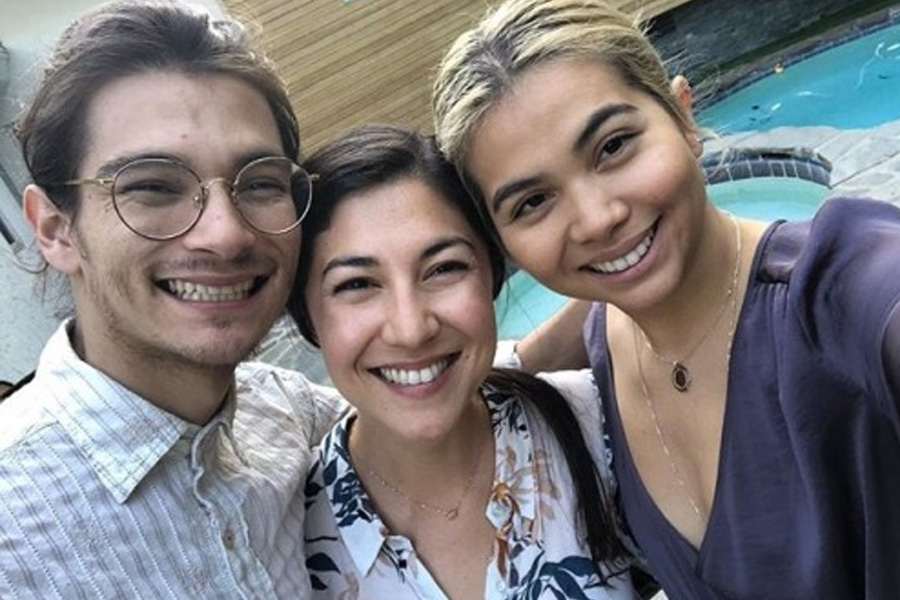
A Family Built in View of the Wings
Jamie Alcroft sits in a peculiar and revealing family setting. His life is connected to performers, artists, and public personalities whose work crosses choreography, comedy, music, and acting. That kind of household rarely behaves like an ordinary domestic unit. It moves with deadlines, rehearsals, travel, and the soft discipline of repeating the same routine under different lights.
His parents shaped that atmosphere in distinct ways. Sarah Kawahara, born in 1954, brought choreographic precision and an international artistic pedigree. Jamie Alcroft, born in 1949, brought comedy, voice work, and the timing that only a seasoned performer develops. Between them, the home became both residence and training ground.
The family’s public outline includes three children. One of them became widely visible through music, film, and television. Another chose privacy. Jamie remained the sibling whose life attracted curiosity because it sat close to fame, yet seldom occupied center stage.
The House That Rehearsed Itself
Sarah Kawahara’s career gave the household a disciplined rhythm. Her work in choreography and ice shows demanded structure, repetition, and exactness. That kind of professional life often bleeds into family habits. Meals, departures, appointments, and even casual conversation can take on a measured cadence.
Jamie Alcroft’s career introduced a different temper. Comedy depends on timing, but it also depends on elasticity. A comic household can feel lighter, more improvisational, and more alert to human absurdity. The result is a domestic environment where artistry is not a special event. It is the background weather.
This helps explain why the family biography feels unusually textured. Each parent contributed a different artistic register. One offered grace and pattern. The other offered wit and performance. Their children grew up inside a small ecosystem of public labor and private adjustment.
The Sibling Network
The family’s visibility increases because one sibling, Hayley Kiyoko, became a major public figure. Born in 1991, she built a career across acting, music, touring, and screen performance. Her prominence inevitably pulled attention toward the rest of the household. When one member becomes visible, the family around them acquires a kind of borrowed illumination.
Alysse Alcroft, the eldest sibling, occupies the opposite position. She is far less public and appears to prefer an ordinary life. That contrast matters. It shows that fame in one generation does not flatten every branch of a family tree. Some relatives remain distant from attention, and that distance can be a form of integrity.
Jamie Alcroft stands between those poles. He is not the star driving coverage, and he is not fully hidden either. He exists in the broad public margin where family, work, and support intersect. That position can be more telling than a headline role.
A Public Record With Gaps
Public biographies present Jamie as the son of two known professionals and one of three children. Community pages add further detail, including a reported birth date of October 25, 1993. There are also mentions of small acting and voice roles. Those details are useful, but they belong to a lighter evidentiary tier than formal records.
That distinction matters because family stories often collect embellishment. Fan communities are adept at assembling fragments into coherent portraits. They notice small credits, old references, social posts, and casual mentions. From those scraps, they build a living picture of a person who might otherwise remain obscure.
The portrait they create suggests someone with a modest public footprint. He is not described as a dominant performer. He is depicted more often in relation to support, travel, and practical work. That pattern is consistent across the available material.
| Year | Event |
|---|---|
| 1949 | Jamie Alcroft was born. |
| 1954 | Sarah Kawahara was born. |
| 1991 | Hayley Kiyoko was born. |
| 1993 | Reported birth year associated with Jamie in community entries. |
| 1997 | Family move referenced in local coverage. |
| 2017 | Jamie Alcroft received a heart transplant. |
| 2018 | The eldest sibling married. |
Work Beyond the Spotlight
The most interesting thing about Jamie may be how ordinary some of his work appears. Public mentions place him in local jobs and seasonal settings, including an ice rink, a sushi restaurant, and a summer camp. Those posts suggest continuity rather than celebrity. They describe a life with schedules, shifts, and direct labor.
That kind of work matters in a family orbiting public life. Touring, appearances, and creative production require people who can manage logistics without applause. Someone has to make sure the day functions. Someone has to do the unglamorous work that keeps motion from becoming chaos.
Jamie’s reputation in fan spaces also reflects this. He is often described as helpful, steady, and quietly supportive. Those are not trivial traits in a family where public performance is common. They are structural traits. They make the larger machine usable.
The 2017 Medical Turning Point
In 2017, Jamie’s father underwent a heart transplant. That fact became a notable marker in the family chronology. Medical events of that scale tend to reorder domestic attention. They change schedules, priorities, and the emotional geometry of a household.
The public nature of that event also exposed the family to wider attention. Such moments often reveal how much of celebrity life remains stubbornly human. No amount of fame prevents worry, recovery, and vulnerability. A medical crisis can make a glamorous household look very small and very mortal.
That year matters because it anchors the family story in something more than career milestones. It reminds us that the same family producing stagecraft and music also had to navigate serious illness. In biographies, those episodes often carry more weight than awards. They expose what the family is built from.
A Fan Made Biography
The fan ecosystem surrounding Jamie is revealing. He appears most often in community wikis, social posts, and microblog references. Those spaces do not behave like formal biography. They behave like collaborative memory. People add fragments, speculate carefully, and preserve what mainstream coverage ignores.
That does not make the material worthless. It means the reader must treat it like a sketch rather than an engraved portrait. The reported 1993 birth date, the small acting and voice work, and the references to support labor all belong to that shared descriptive field. They tell us how people have chosen to understand him.
Such a pattern is common around families with one famous member. The surrounding relatives become interpreted through proximity. Their own identities are filtered through the public appetite for context. Jamie’s story shows that this can produce a strangely intimate kind of visibility.
Why the Margin Matters
There is a tendency to treat central figures as the only ones who matter. That habit misses how much of public life depends on peripheral figures. Jamie represents the brother, son, helper, and local worker whose presence makes the family ecosystem durable.
He also illustrates an important truth about fame. The visible person is rarely a self-contained event. Behind them stands a network of emotional and practical support. Some of that support is formal. Some of it is familial. Some of it comes from people who never become famous themselves.
Jamie’s life appears to sit in that interstitial zone. He is tied to a family of creators, yet his own story is quieter. That quietness is not emptiness. It is a different kind of record, one built from ordinary labor, public proximity, and selective visibility.
Key Takeaways
Jamie Alcroft is best understood through his family context, not as a standalone celebrity. He is the son of Sarah Kawahara and Jamie Alcroft, and one of three children in a creatively dense household. His sister Hayley Kiyoko brought the family into broader public view, while other relatives stayed quieter.
The available picture places Jamie near practical work, brief performance credits, and supportive roles around touring and daily logistics. Community entries also associate him with a 1993 birth year and minor acting or voice work. His story shows how family life, labor, and public attention can overlap without fully merging.