A restrained profile in a public age
Fayez Tlaib remains an elusive figure in modern political storytelling. His name appears most often beside Rashida Tlaib, the well known U.S. Representative. That association defines much of his public visibility. Yet his own life has stayed largely obscured. He seems to favor discretion over display. In a culture that rewards exposure, that choice feels deliberate.
Public references usually sketch only a narrow outline. He is commonly described as Palestinian, with many profiles noting West Bank roots. He married Rashida Tlaib in 1998. Their marriage later ended, often reported around 2015. They have two sons, though their names remain private. These few details form the backbone of his public biography.
Family ties and the shape of private life
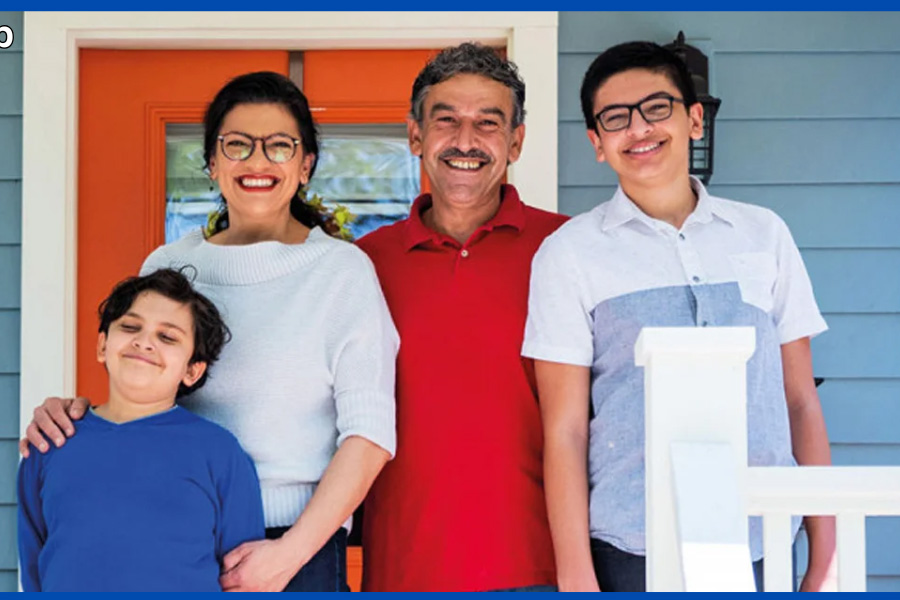
Family has been the clearest thread in Fayez Tlaib’s known story. The marriage in 1998 linked him to a future national figure. Their family expanded with two sons, who were kept away from sustained public attention. That restraint has shaped the way people describe him. He is usually framed through kinship, not through independent prominence. The result is a portrait built from fragments rather than a full dossier.
Privacy appears to be a defining principle in this family narrative. Many public figures share nearly everything online. Fayez Tlaib belongs to the opposite category. His children have rarely appeared in broad circulation. Their names are not widely publicized. That limited visibility suggests a protective household culture. It also explains why biographical accounts stay sparse.
The domestic image is easy to imagine, yet impossible to verify in detail. There is no need to invent scenes or emotional scripts. The available facts already tell an important story. A marriage began in 1998. Two sons arrived. Later, divorce followed. Those milestones carry more meaning than decorative speculation ever could.
Public footprint and professional opacity
Unlike many people linked to politicians, Fayez Tlaib has no expansive public career narrative. There is no long record of public office. There is no celebrated business empire in mainstream coverage. Some casual profiles call him a businessman. Others simply describe him as a private citizen. Those labels suggest activity without offering corroborated specifics.
That absence matters. Modern biographies often overflow with credentials, posts, and milestones. Fayez Tlaib’s account remains unusually sparse. His public footprint is minimal and intermittent. He appears in relation to family and identity, not through repeated professional headlines. Such scarcity can be revealing. It indicates a life largely lived outside the performance economy.
In practical terms, that means outsiders know very little. There is no detailed career chronology commonly repeated in reputable public discourse. There is also no broad record of interviews, speeches, or public platforms. The silence is not accidental. It reflects a boundary between public relevance and private existence. For many people, that boundary dissolves. For Fayez Tlaib, it seems preserved.
Media attention and the logic of cameo visibility
Media mentions of Fayez Tlaib often function like brief cameos. They arrive to support a larger political story. Usually, that larger story belongs to Rashida Tlaib. His name appears as context, not as the center. That pattern creates a recognizable but limited silhouette. He is present, yet intentionally indirect.
Smaller biography pages sometimes repeat the same facts. They mention his marriage, children, and Palestinian background. They may also refer to a private life. Larger outlets, however, rarely elevate him as a standalone subject. This difference is important. It shows how public relevance can depend on narrative proximity. He is known through relation, not through spectacle.
Social media follows a similar logic. Rashida Tlaib’s public account may include family references. Yet Fayez Tlaib himself does not seem to inhabit a broad social platform persona. That absence reduces the volume of searchable details. It also keeps his private life comparatively insulated. In a noisy era, that silence can feel almost radical.
The timeline that can be stated with confidence
The known timeline is short, but still meaningful. In 1998, Fayez Tlaib married Rashida Tlaib. Their family later included two sons. Around 2015, the marriage is commonly reported to have ended. Those dates define the public arc of his marital history. Beyond them, the chronology becomes hazier. That limitation is part of the profile itself.
A concise timeline helps separate fact from embellishment. It resists the urge to manufacture details where none are verified. Many public biographies become bloated with rumor. This one does not. The restrained record has its own integrity. It suggests a person who did not seek broad publicity. It also reflects the limits of available public information.
Snapshot timeline
| Year | Noted event |
|---|---|
| 1998 | Marriage to Rashida Tlaib |
| 1998 onward | Family life with two sons |
| Circa 2015 | Divorce commonly reported |
Net worth and financial uncertainty
Questions about money often attach themselves to public relatives. In Fayez Tlaib’s case, the answers remain unsteady. There is no authoritative public net worth figure widely accepted in mainstream reporting. No clear financial disclosure centers on him as a private spouse. The public financial record, where it exists, focuses on elected officials. It does not usually provide a full portrait of a former spouse’s assets.
This lack of data should not invite guesswork. Unverified estimates can become misleading very quickly. A sparse financial record does not imply extravagance or hardship. It simply means the public lacks reliable documentation. For Fayez Tlaib, the financial dimension remains opaque. That opacity matches the wider pattern of privacy surrounding him.
Why his story attracts attention
People often become curious about figures who remain just out of focus. Fayez Tlaib fits that pattern exactly. He is adjacent to public power, yet not fully inside its glare. That makes him intriguing to readers who expect total visibility. His story resists that expectation. It offers partial illumination and large areas of shade.
There is also a political dimension to the curiosity. Rashida Tlaib occupies a highly visible place in national discourse. Any family connection gains incidental attention. Fayez Tlaib becomes part of that orbit by association. Still, association is not identity. His public image remains narrower than his former spouse’s. That asymmetry has persisted for years.
The fascination, then, comes from contrast. A public official stands at the center. A private former spouse remains in the margins. The difference creates narrative tension. It also reveals how modern attention works. Visibility is not evenly distributed. Some lives are narrated loudly. Others remain intentionally faint.
Key Takeaways
Fayez Tlaib is best understood through a compact set of verified facts. He married Rashida Tlaib in 1998. They have two sons. Their marriage is commonly reported to have ended around 2015. He is publicly associated with Palestinian origins, often described as from the West Bank region.
His career history is not broadly documented. His financial profile is also not publicly established in a reliable way. Media coverage usually mentions him only in connection with Rashida Tlaib. That limited exposure appears consistent with a private life. His public story is therefore defined less by achievement narratives and more by deliberate restraint.