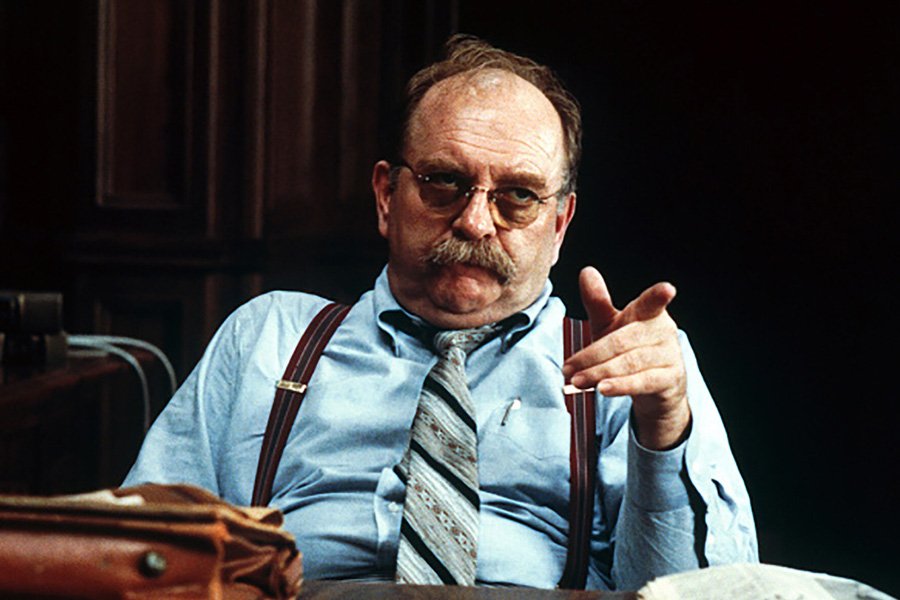
Early Life in Salt Lake City
Anthony Walter Brimley was born on September 27, 1934, in Salt Lake City, Utah. His childhood unfolded amid the austere grandeur of the Intermountain West. That setting fostered endurance, discipline, and a practical temperament. Those traits later colored his screen persona.
By age 14, he had left high school. From 1948 onward, he worked as a cowboy across Arizona, Idaho, and Nevada. Those formative years taught horsemanship and self reliance. They also introduced him to labor that demanded grit every day.
Military Service and Western Labor
In 1953, Brimley enlisted in the United States Marine Corps. He entered service in San Diego, California, at age 18. During the later Korean War years, he was stationed in the Aleutian Islands. His military chapter ended in 1956 with a discharge in San Diego.
That period strengthened his stern poise and unadorned manner. In 1957, he began working as a horse wrangler on film sets in Phoenix, Arizona. He soon moved from behind the scenes labor to on camera extras work. His equestrian fluency made him unusually valuable on Western productions.
He spent the years between 1957 and 1975 accumulating rugged industry experience. He trained horses, handled stunts, and learned set culture from the inside. Such expertise gave him credibility before he spoke a single line. It also anchored his later performances in tactile realism.
Arrival as a Character Actor
Brimley did not receive his first speaking role until 1979. He was 45 years old when that breakthrough arrived. Many actors seek notice early, yet his ascent was unhurried. That delay gave his screen presence a seasoned and weathered resonance.
His first major appearance came in The China Syndrome in 1979. He played a plant supervisor with concise authority. The role signaled his aptitude for grounded, no nonsense characters. Studios and directors quickly recognized his dependable temperament.
During the 1980s, he became a familiar figure in films. He often portrayed doctors, lawmen, and pragmatic ordinary men. His voice carried gravitas without theatrical excess. Audiences trusted him because he seemed unforced and exact.
Notable Films and Performances
Several performances defined Brimley’s reputation. In The Thing from 1982, he played Dr. Blair with patient intelligence and latent alarm. The film required composure under dread, and he supplied it. His expression suggested a man thinking several steps ahead.
Tender Mercies arrived in 1983 and brought award recognition. He appeared as a Texas Ranger in a film celebrated for restraint. The role contributed to his Academy Award nomination. His performance was spare, yet it held notable moral weight.
In The Natural from 1984, he embodied Edward Archibald. The part showed his aptitude for calm authority in a mythic American story. Then Cocoon arrived in 1985 and broadened his popular appeal. He portrayed Ben Luckett, a retiree touched by extraterrestrial renewal. The role earned him a Golden Globe nomination.
Clean and Sober followed in 1989, adding another sober turn. Across these films, his screen identity remained coherent yet flexible. He could suggest kindness, skepticism, or bruised wisdom with subtle shifts. That versatility made him durable in a fickle industry.
Family Life and Private Commitments
Brimley’s private life reflected steadiness rather than spectacle. In 1956, he married Lynne Bagley. Their marriage lasted 44 years, until her death in 2000. Together they raised four sons over a decade.
Their children were born in 1957, 1960, 1963, and 1967. The family structure suggests long term devotion and domestic consistency. In 2007, Brimley married Beverly Berry. His later years included residences in Greybull, Wyoming, and Santa Clara, Utah.
He also lived as a devoted member of The Church of Jesus Christ of Latter day Saints. He participated in leadership duties within local wards. Faith and service formed an important axis in his personal identity. That devotion aligned neatly with his principled public image.
Community Work and Diabetes Advocacy
Brimley’s community involvement extended beyond performance. In 2008, he co founded Hands Across the Saddle, also called HATS. The nonprofit operated in Wyoming’s Bighorn Basin. It supported ranch families facing severe winters and practical hardship.
The organization assisted with feed, fencing, and volunteer labor. Over its early years, it raised 150000 dollars. Volunteers contributed more than 1200 hours. Annual trail rides brought together groups of more than 50 riders.
His advocacy also reached the field of diabetes awareness. After being diagnosed with type 2 diabetes in his early 60s, he became an informative spokesman. Between 1998 and 2020, he recorded public service materials. Those recordings reached an estimated audience of 30 million.
In 2010, he participated in 12 state fair health events. There, he discussed blood sugar monitoring and practical education. His manner made a medical subject feel approachable. He translated concern into direct public instruction.
Career Statistics and Professional Range
Brimley’s career statistics reveal unusual breadth. He appeared in 69 feature length films between 1968 and 2000. He also accumulated 23 television guest roles from 1975 to 1995. Earlier still, he earned 15 stunt and wrangler credits between 1965 and 1975.
His career span covered 44 years on screen. Across 1968 to 2012, he averaged 1.6 roles per year. These numbers suggest persistence rather than frenzy. He worked with measured consistency over long intervals.
He became known for 17 distinct character types. Doctors, sheriffs, supervisors, and elderly citizens all fell within his range. His moustache, voice, and reserved cadence became emblematic. He created memorable authority without melodrama.
Legacy and Cultural Memory
Brimley’s legacy rests on simplicity, durability, and elemental presence. He was not fashioned as a flashy leading man. Instead, he excelled as a pillar of narrative stability. Directors could place him in a scene and trust the result.
Industry peers valued his mentorship. He advised 12 emerging actors on etiquette and horsemanship. That guidance passed practical wisdom to younger performers. His influence therefore extended beyond visible roles.
His lines from five films continue to circulate widely among fans. More than 200 fan created videos have used his quoted dialogue. Such persistence indicates enduring affection and cultural recall. His voice remains instantly recognizable to many viewers.
In 2021, his personal film notes and horse training journals entered the American Film Institute archives in Los Angeles. That donation preserved a working record of his craft. It also affirmed the historical significance of his career. Brimley’s life joined Western labor, faith, service, and screen craft into one coherent arc.
Key Takeaways
Brimley’s life began in 1934 and matured through labor, military service, and Western expertise. His first speaking role came in 1979, after years of practical film work. He became a respected character actor through disciplined understatement and lived in a manner shaped by service.
His family life was stable, his faith was central, and his community work was tangible. He co founded HATS in 2008 and spoke publicly about diabetes for decades. His career and advocacy together formed a legacy of steadfast usefulness and quiet distinction.


